Phased workload move without production downtime
Three migration waves, rehearsed rollback plans and DR runbooks aligned with plant operations.
- 0 min unplanned downtime
- 26% lower run-rate cost
- 10 weeks from assessment to wave 1
If licensing, DR posture or team capacity are becoming a constraint, we design a realistic migration path into Google Cloud. You get sequencing, business case, cutover/rollback runbooks and clear management decisions.
TCO baseline · workload sequencing · cutover/rollback · DR readiness · FinOps governance
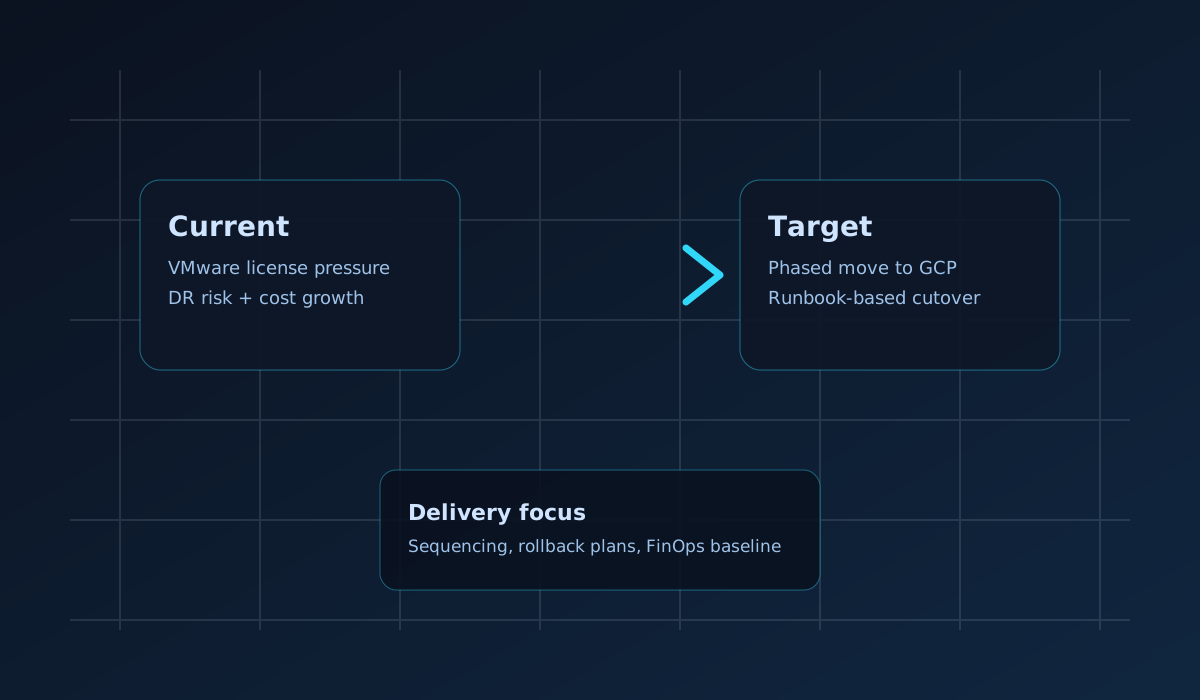
We do not start with tooling. We start with business and operational risk: license pressure, availability targets, DR posture and team capacity.
Short examples where the primary objective was risk reduction with stable operations.
Three migration waves, rehearsed rollback plans and DR runbooks aligned with plant operations.
Parallel VMware and GCP operation with clear SLOs, escalation and executive reporting.
Rightsizing, commitments and governance cadence for CFO/CTO monthly reviews.
These snapshots are anonymized: exact environments, workloads and migration runbooks are reviewed only in a qualified call. Publicly we keep the business impact, risk type and time-to-outcome.
Each phase has measurable outputs for both leadership and engineering teams.
We map workloads, dependencies, licensing and operational risk.
Hybrid/GCP design, DR model and migration sequencing.
Runbook-driven migration with rehearsals and fallback options.
Governance cadence, reporting and post-migration operational stability.
Most common questions before project kickoff.
No. We usually recommend a phased approach based on workload criticality and business impact.
Every cutover includes rehearsed runbooks, rollback design and a defined incident command model.
Yes. We often run a controlled hybrid period with explicit SLAs and success metrics.
In 30 minutes we review license pressure, cutover risk and whether the right move is a phased migration, hybrid operating model or a focused assessment first.